



Digital advertising in practice – how to use multimedia in brand communication?
You have just a few seconds to capture your audience’s attention. In a space where dozens of brands compete for visibility – at trade shows, in shopping malls or during conferences – that time becomes even shorter. When your message gets lost in a flood of stimuli, static content often loses to motion, light and interaction. This is where digital advertising steps in. It allows you to respond in real time, adjust your message to the situation and guide the audience step by step through your offer. Discover how to use digital signage to make your brand visible where first impressions matter – and turn your space into an effective sales tool.
Digital advertising – what is it?
Digital advertising is most commonly associated with online activities – social media campaigns, display ads, video ads or sponsored search results. These are messages displayed on computer and smartphone screens, precisely targeted and measurable. Increasingly, however, digital advertising also extends into physical spaces.
In an offline setting, digital advertising uses multimedia devices – screens, LED displays, interactive kiosks and more – to present marketing content. Unlike traditional posters or roll-ups, this type of communication can be updated in real time.
Digital signage makes it possible to display videos, animations, graphics and text in a way that can be easily adapted to the location and campaign objective. Motion and vivid colors attract attention more effectively than print, increasing the chance of holding a viewer’s focus for a few extra seconds. This extended contact improves brand recall and supports purchasing decisions. As a result, digital advertising in public spaces not only builds awareness but also directly supports sales.
In practice, it includes both large LED screens used at events and interactive kiosks placed in retail environments. Each solution can be tailored to the nature of the event and the target audience.
What is digital advertising? Although it is often associated with the internet, it increasingly includes physical spaces where screens and multimedia are used to promote a brand.
Types of digital advertising
Digital advertising in physical environments is built on two main pillars: large-format visual impact and interaction. Depending on campaign goals, you can focus on a strong visual presence or direct audience engagement. Often, both approaches are combined within a single event.
LED screens and video walls
LED screens used in digital advertising make it possible to create large, highly visible communication surfaces. Their modular design allows the size and proportions to be adapted to a stage, exhibition stand or conference room. They can serve as a backdrop for presentations, a dynamic scenography element or the focal point of an event.
Content displayed on LED screens changes smoothly and without downtime. This means a single display can communicate multiple messages throughout the day.
Touchscreen kiosks
Interactive kiosks elevate digital advertising to a direct engagement level. A touchscreen allows visitors to browse offers independently, watch videos, use configurators or complete forms. Users choose the content that interests them and control the pace of exploration.
Kiosks also support lead generation. Contact forms, short surveys or newsletter sign-ups can be completed without paper. Data goes directly into the system, accelerating follow-up communication. Digital advertising then becomes a measurable support tool for sales.

Touch
Simple operation allows you to quickly launch and update displayed content without technical assistance.

Touch
A responsive screen reacts instantly to every gesture, enabling smooth use of interactive features.

Mobile
The structure allows easy repositioning within a stand or across an entire event space.
Applications of digital advertising
Digital advertising enables effective communication management in retail environments. During trade shows, conferences or product launches, multimedia screens can both strengthen brand visibility and deliver specific information. At one moment they promote a new offer, at another they direct attention to a presentation or contest. Content changes smoothly, without downtime or structural adjustments.
In retail stores and shopping malls, digital advertising operates at a different pace. Quick reactions to customer behavior are essential. Morning offers can differ from those displayed in the afternoon. Seasonal campaigns replace previous messages without the need for reprinting materials. Digital signage organizes the information space and shortens the path from interest to purchase.
Another area of application includes spaces where visitors need guidance or support in decision-making. Interactive kiosks help users find products, check availability or compare options. In hotels and office buildings, they provide navigation. At events, they enable registration and data collection. Digital advertising thus becomes not only a branding tool but also operational support for sales and customer service.
How to plan an effective digital advertising campaign?
Every advertising campaign starts with a goal. Is it brand awareness, product promotion or lead generation? The message should support clear business objectives.
The next step is choosing the right medium. LED screens work well at large-scale events. An interactive kiosk may be a better solution in a showroom or exhibition stand.
Finally, consistency matters. Digital signage offers flexibility in modifying content, but the overall strategy must remain coherent. Well-designed digital advertising attracts attention, engages audiences and leads them toward action.
If you are planning an event, trade show or retail space upgrade, choose solutions based on LED screens and interactive kiosks. Use the power of multimedia to design communication that works for your results – from the first glance to the final contact with your brand.

- Multimedia advertising
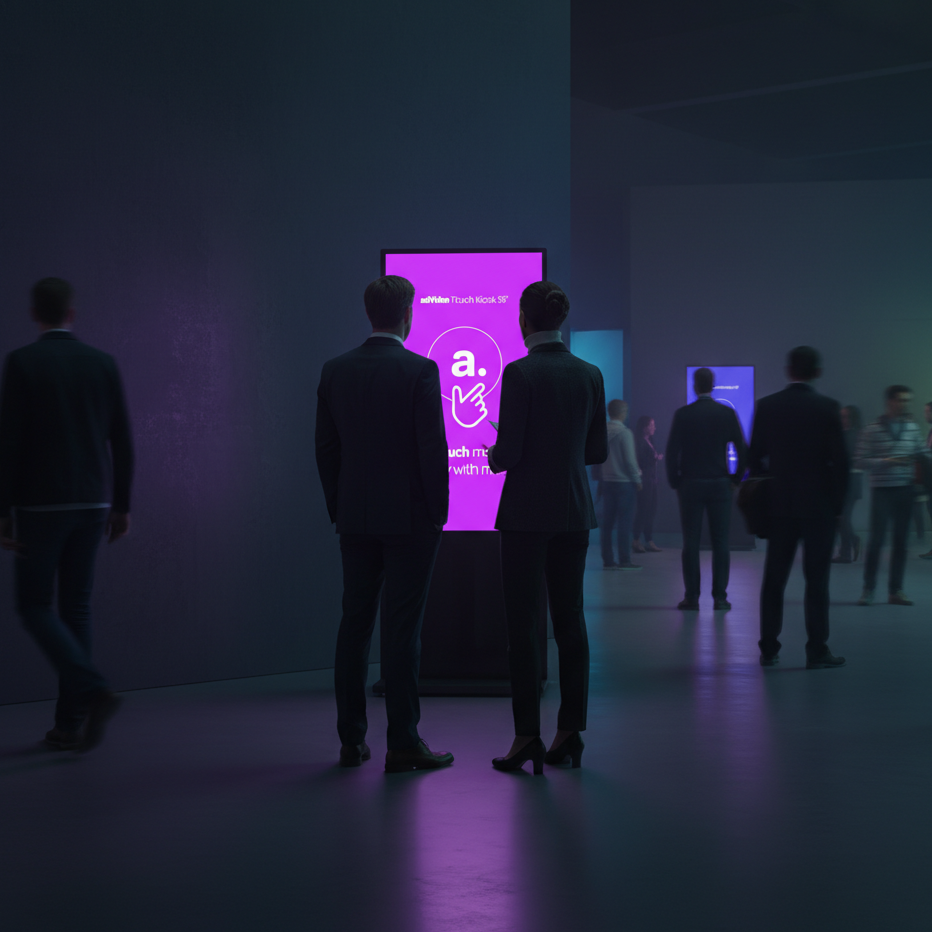 Digital advertising in practice – how to use multimedia in brand communication?
You have just a few seconds to capture your audience’s attention. In a space where dozens of brands compete for visibility – at trade shows, in shopping malls or during conferences – that time becomes even shorter. When your message gets lost in a flood of stimuli, static content often loses to motion, light and interaction. This is where digital advertising steps in. It allows you to respond in real time, adjust your message to the situation and guide the audience step by step through your offer. Discover how to use digital signage to make your brand visible where first impressions matter – and turn your space into an effective sales tool.
- Multimedia advertising
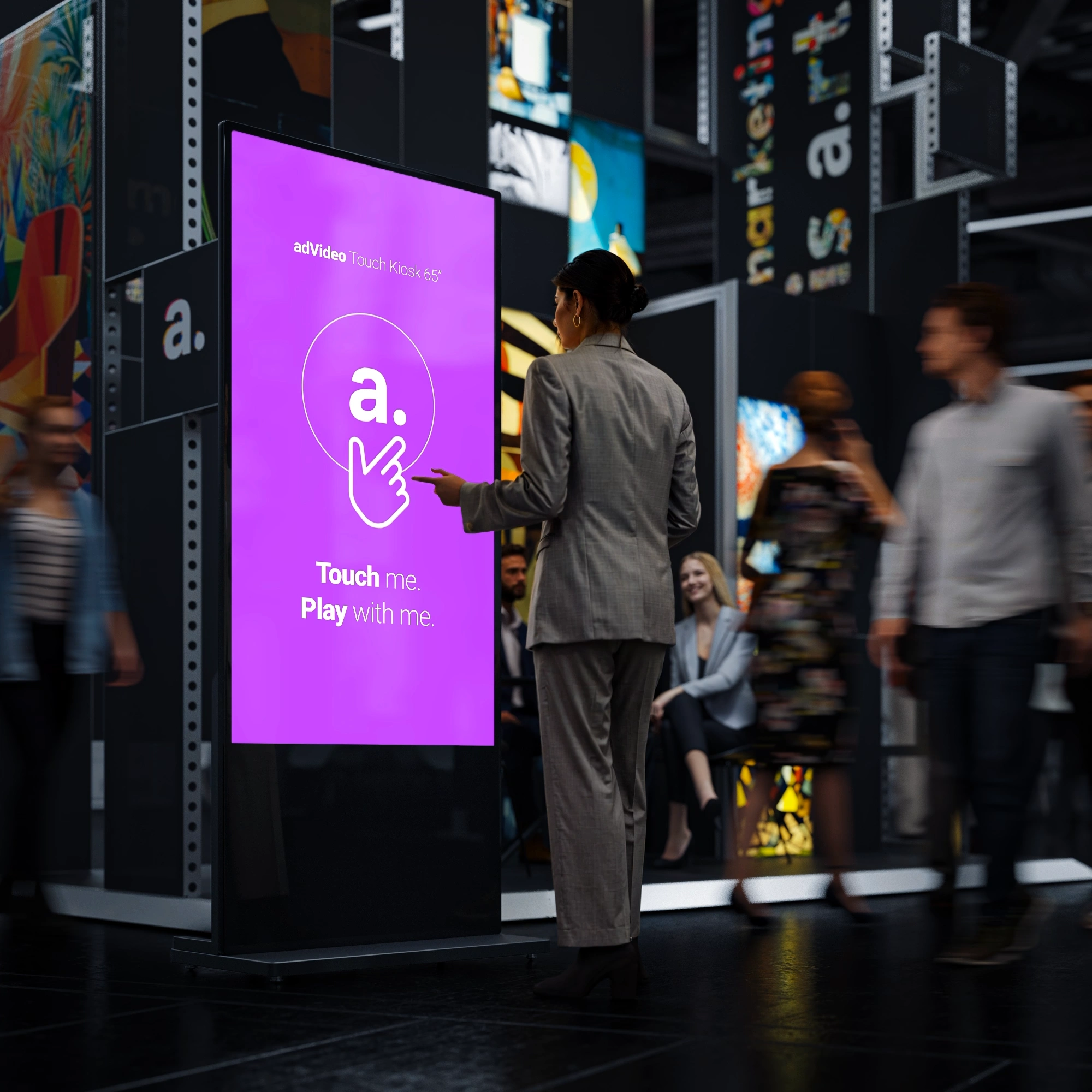 Open up to interaction – meet the adVideo Touch Kiosk infokiosk
What draws attention in a space full of stimuli? Content that invites interaction. Visitors want to act, tap and discover what’s inside. Interaction gives them a sense of control and helps the brand build relationships. It’s a form of direct contact worth using at trade shows and events. It helps focus attention and extends the time spent at your booth. But how do you achieve that? Explore the refreshed version of our infokiosk and see how interaction can bring a trade show space to life.